
Ammalife works to support women’s health globally by co-funding research in partnership with organisations such as the WHO, Gates Foundation and universities
Our mission is to work with researchers and funding bodies to support the development of better healthcare standards globally, with a particular focus on maternal sepsis and postpartum haemorrhage
Below you can find out more information about projects Ammalife has supported
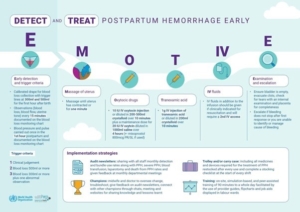
The E-MOTIVE Trial
The study recruited over 210,000 women across countries where deaths and poor maternal health from Postpartum Haemorrhage (PPH) are high. The trial tested the use of the blood collection drape to aid in PPH detection, alongside a bundle of treatments (called ‘MOTIVE’) already recommended by the WHO, which could be rapidly deployed once a potentially dangerous bleed was detected.
The result was phenomenal. Early detection (‘E’) combined with the ‘MOTIVE’ bundle reduced the most serious bleeds and worst outcomes of PPH by 60%.
Following the success of the intervention, the WHO recommends the E-MOTIVE bundle as part of prevention and treatment of PPH

Antibiotics in Miscarriage Surgery (AIMS) Trial
Infection following miscarriage surgery is a problem affecting over 33 million pregnancies each year. A majority of women will have their miscarriage managed with surgery to empty the womb. Infection can occur following this surgery and this is a particular problem in low income countries. In some low income countries the rates of infection following miscarriage surgery are as high as 30%. These infections can result in death, serious illness or long-term health problems.
Currently international and national medical guidelines do not recommend antibiotics to be given routinely in miscarriage surgery because there is no evidence that tells us that this is effective. The AIMS trial proposes that if antibiotics are given just before the procedure of miscarriage surgery this may reduce the chance of infection occurring. This is being tested in the form of a large clinical trial conducted in four low income countries (Malawi, Tanzania Uganda and Pakistan).

Progesterone in Spontaneous Miscarriage (PRISM) Trial
The PRISM trial researched whether progesterone could prevent miscarriage in women with early pregnancy bleeding. The aim of the trial was to provide robust evidence to the medical community to potentially change current guidelines and practice.
“I was signed up to the PRISM trial after having bleeding in early pregnancy. After experiencing three miscarriages since the birth of my son it was a relief to feel like we were doing something proactive in this pregnancy. I obviously don’t know whether the trial made a difference to this pregnancy’s outcome, but I was absolutely delighted when our baby daughter was born. We’ve waited two years for her arrival and experienced a lot of heartache along the way so I just wanted to say thank you for offering hope to more parents through these trials.” Faye who took part in the PRISM trial.
Carbetocin Room Temperature Stable (RTS) Trial
Postpartum haemorrhage – heavy bleeding after childbirth – is the leading cause of maternal mortality in low-income countries. It causes nearly a quarter of all deaths from complications of pregnancy and childbirth in sub-Saharan Africa and Asia. The Carbetocin RTS trial was commissioned by the World Health Organisation to test carbetocin RTS for preventing postpartum haemorrhage. This was a particularly important study for mothers giving birth in places where refrigeration of uterotonics, such as oxytocin, may not be reliable.
Postpartum haemorrhage – heavy bleeding after childbirth – is the leading cause of maternal mortality in low-income countries. It causes nearly a quarter of all deaths from complications of pregnancy and childbirth in sub-Saharan Africa and Asia. The Carbetocin RTS trial was commissioned by the World Health Organisation to test carbetocin RTS for preventing postpartum haemorrhage. This was a particularly important study for mothers giving birth in places where refrigeration of uterotonics, such as oxytocin, may not be reliable.
FAST-M – a toolkit to tackle sepsis in childbirth
Sepsis is a life-threatening response to infection and is one of the biggest killers of mothers worldwide. Our work in Malawi has shown that women are dying unnecessarily because systems are not in place to identify and treat sepsis quickly and effectively. We know from other countries that survival can be doubled if the right care is delivered early.
Ammalife supported the development of a package of care suitable to treat maternal sepsis in Malawi. Following in-depth research, involvement of a wide panel of experts, in-country consultation with patients, healthcare workers and the Malawi ministry of health, a care package to combat life-threatening maternal sepsis in Malawi has been developed. Preparations are now underway for the package to be carefully tested in key pilot sites in Malawi before it can be rolled out country-wide. This will include the provision of training and resources to better identify and treat sepsis, ultimately saving mothers’ lives.